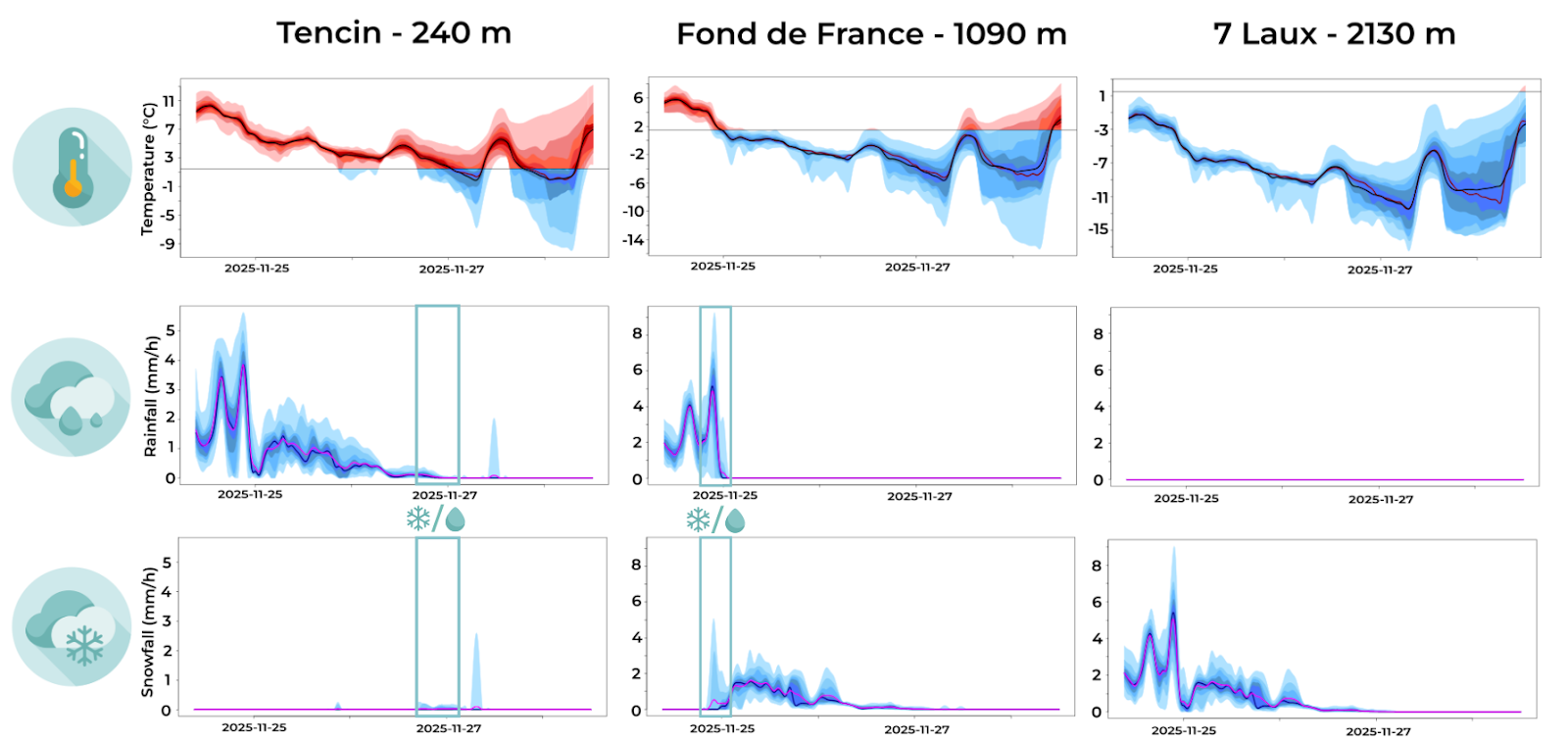



Efficient transportation management is crucial for any business relying on logistics and the timely delivery of goods. In today’s world, where delivery times and flow optimization have become major competitive advantages, the weather remains among the most unpredictable and potentially disruptive factors. Unfavorable weather conditions can lead to costly delays, accidents, and significant disruptions in your supply chain.
This is why integrating accurate weather forecasts into your transportation management system (TMS) is essential to optimize operations, reduce costs, and anticipate climatic uncertainties.
Photo by Bernd Dittrich on Unsplash.
The direct impact of weather on transport and logistics
Weather conditions directly affect the performance of all transportation modes: road, air, sea, and rail. Whether it’s rain, snow, storms, or fog, each type of weather event can cause major disruptions in the transportation network.
Here are a few examples:
- Road transport: Rain, snow, or icy roads increase accident risks, extend transit times, and may even lead to road closures.
- Air transport: Storms, fog, or high winds can cause massive delays and sometimes cancellations, disrupting the entire supply chain.
- Sea transport: Headwinds, storms, or cyclones slow ships, impacting the delivery of goods to ports.
- Rail transport: Flooding or heavy snowfall disrupts rail lines, while excessive heat can cause rail deformation, leading to significant delays.
Weather conditions are not a factor to ignore. On the contrary, it is essential to forecast and anticipate these disruptions to ensure continuity in the logistics chain and avoid added costs.
The importance of integrating FROGCAST weather forecasts into your TMS
A high-performance TMS enables you to plan, optimize, and execute each step of the transportation process seamlessly. However, without integrating weather data, even the best TMS might not provide optimal results. By using FROGCAST’s detailed and real-time weather data, you can anticipate disruptions and proactively adjust your operations.
Here’s why this makes all the difference:
- Dynamic route planning: With accurate weather forecasts, your TMS can automatically and in real-time adjust routes to avoid risky areas (snow-covered, flooded, or closed roads). This helps minimize delays and ensures faster, safer deliveries.
- Optimizing transit times: By anticipating weather disruptions, departure and arrival times can be adjusted to reduce downtime and slowdowns.
- Reducing risks and accidents: Challenging weather conditions significantly increase the risk of accidents. By integrating accurate weather forecasts, companies can take preventive measures, such as temporarily suspending deliveries in dangerous conditions or changing routes.

Photo by alvarez on iStock.
Impact on costs and efficiency
Beyond the safety and punctuality of deliveries, accurate weather forecasts in a TMS also contribute to reducing operational costs and enhancing overall transportation efficiency:
- Reducing costs linked to delays: By anticipating bad weather, you can avoid added costs related to vehicle downtime, extra fuel or storage fees, and penalties for late delivery.
- Improving fuel management: You can reduce fuel consumption by adapting routes according to weather conditions, such as avoiding areas with headwinds.
- Protecting sensitive goods: Extreme conditions can harm the quality of certain products, like food or medicine. By incorporating forecasts into your TMS, you can plan deliveries to preserve the integrity of your goods.
Enhanced risk management
Weather forecasts play a key role in risk management within supply chains. By integrating high-precision forecasts into your TMS, you are better prepared for weather-related uncertainties:
- Contingency planning: When extreme weather is forecasted, you can implement alternative plans, such as postponing certain deliveries or adjusting routes to ensure safe operations.
- Proactive management of unexpected events: Instead of enduring delays or incidents caused by weather, anticipation through a weather-integrated TMS helps reduce operational interruptions and ensures smoother supply chain flow.
Don’t let the weather disrupt your operations
Ignoring weather data in your transportation operations opens the door to unnecessary uncertainty and risks. Conversely, companies that integrate accurate weather forecasts into their TMS position themselves strategically: they can plan smarter, respond faster to unexpected events, and optimize costs while enhancing customer service.
With FROGCAST, you gain access to accurate weather forecasts (view the benchmark) tailored to meet your needs and optimize your logistical performance.
⏱️ Real-time weather forecasts: We provide updated data up to 8 times a day so you can adjust your operations at any time.
🚛 Better logistics efficiency: Our solutions help you optimize routes, reduce costs, and enhance performance.
🏋️ A competitive advantage: With ultra-precise weather forecasts, you stay ahead of unexpected events and maintain continuity in your operations.
Try our API for free, don’t let the weather disrupt your routes, and get ahead of your competition!