


The use of a weather API has become a common practice in the development of digital solutions. Aimed at developers, this article provides a detailed overview of weather APIs and their application in enhancing digital solutions.
Definition and importance of a weather API
What exactly is a weather API?
To understand what a weather API does, imagine you’re building a mobile app that needs to display tomorrow’s weather. Without an API, you’d need to manually collect data from weather stations, interpret satellite imagery, run forecasting models, and update this information constantly. That’s simply not feasible for most developers.
This is where a weather API becomes invaluable. A weather API (Application Programming Interface) serves as a bridge between your application and meteorological data sources. More specifically, a weather API is:
- A standardized communication protocol that enables software applications to request and receive weather data programmatically
- A collection of endpoints that provide access to various types of meteorological information through HTTP requests
- A structured data delivery system that returns weather information in easily parsable formats like JSON or XML
- A gateway to real-time and forecasted data collected from weather stations, satellites, radars, and advanced prediction models
A weather API handles all the complex meteorological processes behind the scenes, pulling data, then delivering comprehensive weather details in a structured, easily accessible format.
How does a weather API work?
The functioning of a weather API involves several key components:
- Authentication: Your application identifies itself using an API key or token.
- Request: When you need weather information, you send an HTTP request specifying what you need to a specific endpoint with parameters (location, date, data type) — perhaps the current temperature in Paris, or a 7-day forecast for Tokyo.
- Processing: The API server retrieves relevant data from meteorological databases.
- Response: The server returns formatted weather data to your application, typically JSON or XML. This standardized format makes it incredibly simple to integrate weather data into websites, mobile apps, backend systems, or any software that requires meteorological information.
- Integration: Your application processes and displays the data to end users.
Discover what a weather API does and how it can power smarter, data-driven decisions : why use a weather forecast API?
Key meteorological data available through weather APIs
Weather APIs offer an impressive range of features that go far beyond simply telling you if it’s going to rain. Let’s explore what makes them so versatile:
Current weather conditions
- Real-time temperature, feels-like temperature, and heat index
- Humidity levels and dew point
- Atmospheric pressure (sea level and station level)
- Wind speed, direction, and gusts
- Visibility range
- Cloud coverage percentage
- Precipitation intensity and accumulation
This data is constantly updated, often every 15 minutes, ensuring you always have the freshest information.
Weather forecasts
- Hourly forecasts (typically up to 48-72 hours), perfect for planning immediate activities.
- Daily forecasts (typically up to 7-16 days), allowing for longer-term planning
- Minute-by-minute precipitation forecasts (nowcasting), incredibly useful for applications that need to know exactly when rain will start or stop.
- Extended outlooks and seasonal trends
Advanced meteorological data
- Severe weather alerts and warnings
- UV index and solar radiation
- Air quality indices (PM2.5, PM10, ozone, etc.)
- Pollen counts and allergen forecasts
- Marine conditions (wave height, water temperature, tides)
- Astronomical data (sunrise, sunset, moon phases)
Why weather data accuracy matters
Not all weather data is created equal, and the accuracy of your weather API can make or break your application’s credibility. Users quickly lose trust in apps that consistently provide incorrect forecasts. If your travel app tells someone it’ll be sunny but they get caught in a downpour, they’re unlikely to rely on your app again.
For businesses, inaccurate weather data translates directly into financial impact. A logistics company that fails to anticipate a snowstorm might have trucks stranded, deliveries delayed, and customers frustrated. A retail business that stocks winter coats during an unexpected warm spell faces inventory losses. An energy company that miscalculates temperature-driven demand could face grid stability issues.
In some industries, accuracy isn’t just about money, it’s about safety. Aviation relies on precise weather data for flight planning and safety decisions. Construction sites need accurate forecasts to protect workers from dangerous conditions like lightning or extreme heat. Agricultural operations depend on precise precipitation predictions to optimize irrigation and prevent crop damage.
This is why choosing the right weather API, with proven accuracy and reliable data sources, should be a top priority for any developer integrating weather features into their application.
FROGCAST weather API: An advanced solution
At FROGCAST, our weather API is designed to offer precision and ease of integration. Using our weather API means that you can provide your users with reliable and up-to-date weather information, a major asset for any weather-dependent application.
What sets FROGCAST weather API apart
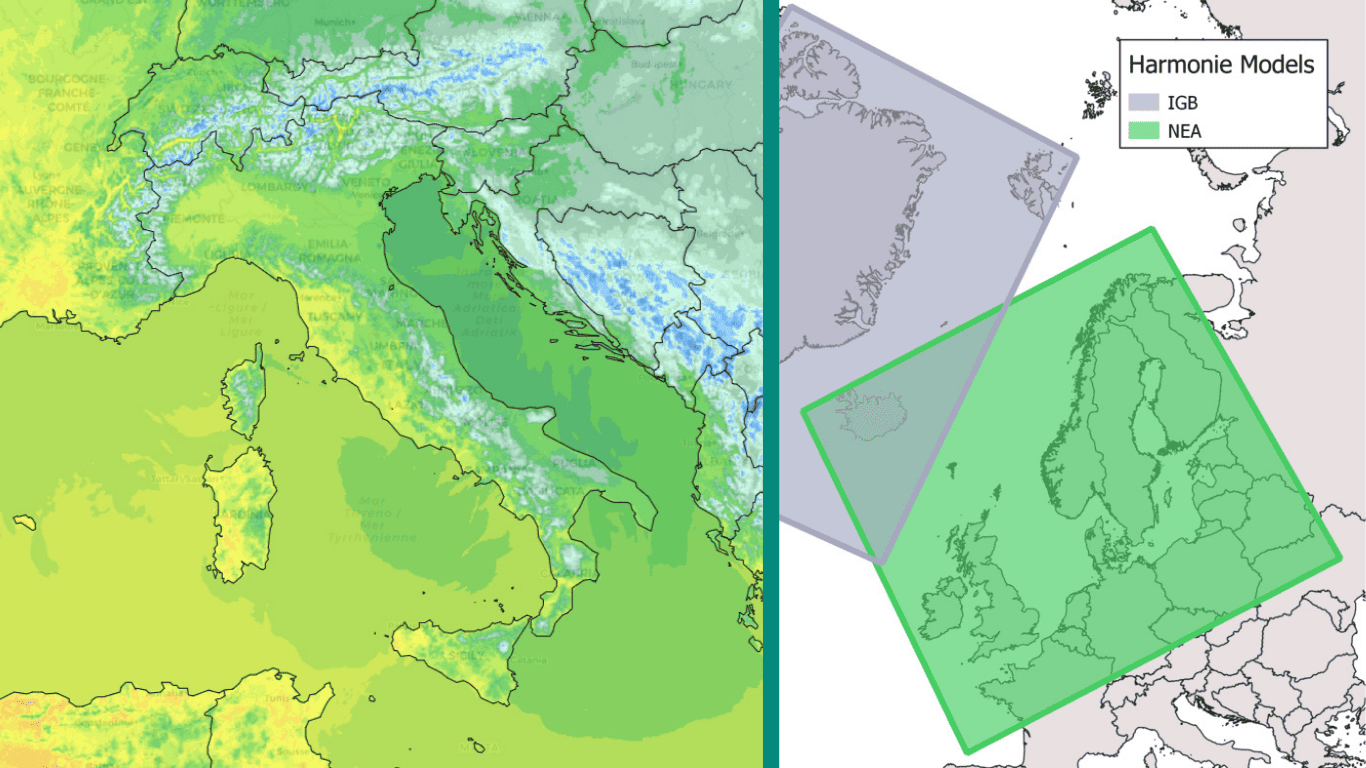
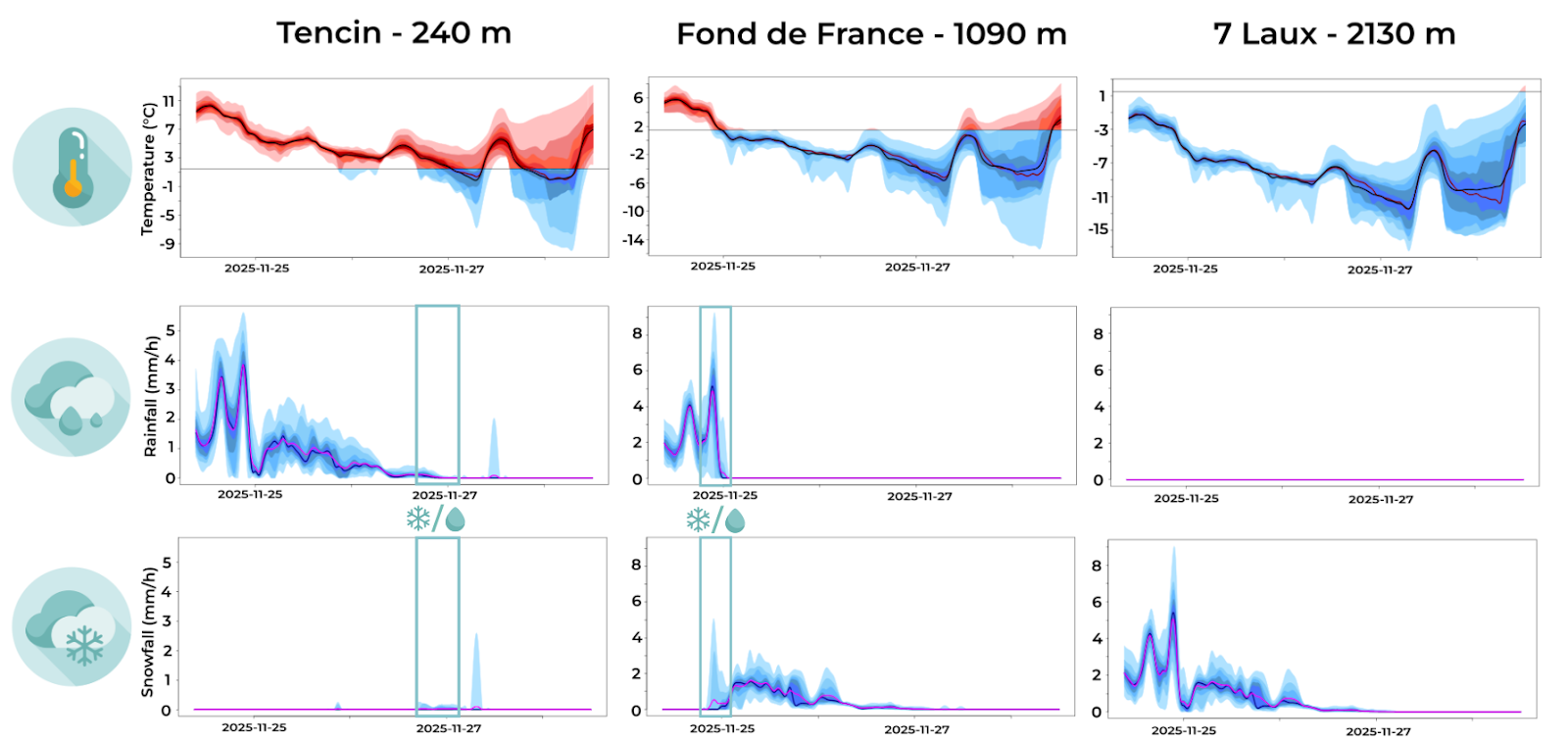
Whether you need a simple current temperature or a detailed multi-day forecast, our API provides exactly the data you request. Our multi-model ensemble combines outputs from several advanced weather models1 and automatically selects the most reliable prediction for each location and timeframe. This approach consistently surpasses single-model forecasts (view the benchmark) and gives your applications a clear accuracy advantage.
In short, our weather API relies on cutting-edge technology to deliver top-tier meteorological data:
- Multi-model ensemble combining several forecasting systems for optimal accuracy
- Hyperlocal precision with street-level resolution
- Worldwide coverage across 200+ countries and territories
- Real-time updates refreshed every 15 minutes
- High-availability infrastructure guaranteeing 99.9% uptime
- Flexible output formats including JSON, XML, and CSV
Why integrate a weather API into your application?
The integration of a weather API is crucial for applications ranging from agricultural planning to logistical management. It enables proactive decision-making by providing accurate and real-time weather forecasts.
- Agriculture: Optimize irrigation schedules, predict optimal planting and harvesting windows, and monitor frost risks. more info
- Logistics & transportation: Plan efficient routes, anticipate delivery delays, and ensure fleet safety during adverse conditions. more info
- Energy Sector: Forecast renewable energy production, manage grid demand, and optimize energy trading strategies.
- Retail & E-commerce: Adjust inventory based on weather-driven demand patterns and personalize marketing campaigns. more info
- Travel & hospitality: Provide guests with accurate forecasts, optimize staffing levels, and enhance customer experience.
Advantages of FROGCAST weather API
➡️ Optimal accuracy: Our weather API combines advanced weather forecasting models2 to provide extremely accurate data.
➡️ Ease of integration: Save time and development resources.
➡️ Comprehensive documentation: Step-by-step integration guides for popular programming languages. Interactive API explorer for testing endpoints.
➡️ Flexible pricing structure: Scalable plans that grow with your application. Transparent pricing with no hidden fees.
➡️ Developer-friendly features: RESTful API architecture following industry standards. Consistent data formats across all endpoints.
➡️ Enterprise-grade reliability: 99.9% uptime SLA for business-critical applications.
➡️ Responsive support: Technical support team available via email and chat. Regular API updates and feature enhancements.
To learn how to use the FROGCAST weather REST API and get the most out of its data, click here : How to use the FROGCAST weather REST API?
Your mission as a developer with our weather API
As a developer, integrating our weather API allows you to provide advanced weather services to your users, enhancing both value and functionality of your projects.
Step-by-step integration guide
- Authentication
Begin by obtaining your API key from your FROGCAST dashboard at https://app.frogcast.com/fr/api/. Secure this token (never expose it in client-side code) and include it in your request headers for authentication.
- Making your first API call
Use a simple GET request to retrieve weather forecast data. Here’s a basic example using Python to get temperature and solar irradiance forecasts for Paris:
python

import requests
import pandas as pd

headers = {'Authorization': 'Token YOUR_API_TOKEN'}

url = 'https://api.frogcast.com/api/v1/forecast/'

parameters = {
 'latitude': 48.8566,
 'longitude': 2.3522,
 'time_step': 60,
 'horizon': 2880,
 'fields': 't2m,ghi,10m_wind_speed'
}

response = requests.get(url=url, params=parameters, headers=headers)
api_data = response.json()

forecast = pd.DataFrame(
 data=api_data['data'],
 index=api_data['index'],
 columns=api_data['columns']
)

print(forecast)
This request retrieves a 48-hour forecast (2880 minutes) with hourly data for temperature, global horizontal irradiance, and wind speed at the coordinates of Paris. - Parsing the response
Process the JSON response to extract relevant weather parameters for your application’s needs. The API returns data in a structured format with timestamps as the index and your requested fields as columns.
Explore the API documentation to learn more.
Best practices
For more detailed best practices on security and reliability when integrating REST APIs, visit our dedicated article here: Security and reliability of weather data: Best practices for integrating REST APIs.
It offers comprehensive guidelines to help you ensure a secure and smooth integration of weather data into your applications.
Conclusion
The integration of the FROGCAST Weather API is a step forward for developers looking to include accurate and reliable weather data in their applications. It represents an essential tool in your development arsenal.
Whether you’re building a mobile app, web platform, or enterprise solution, a weather API unlocks powerful capabilities that enhance user experience and enable weather-intelligent features. The FROGCAST Weather API combines accuracy, reliability, and ease of use to help you deliver exceptional weather-enabled applications.
Create your account in 2 minutes to test
To access accurate and reliable weather forecasts, explore the FROGCAST Weather API. Create your account in a few clicks and start testing the accuracy of FROGCAST Weather API’s weather data.
Begin your integration journey today and discover how seamlessly weather intelligence can enhance your digital solutions.
- Discover how we generate our weather forecasts here and what weather sources we use here. ↩︎
- Discover here which weather sources we use. ↩︎