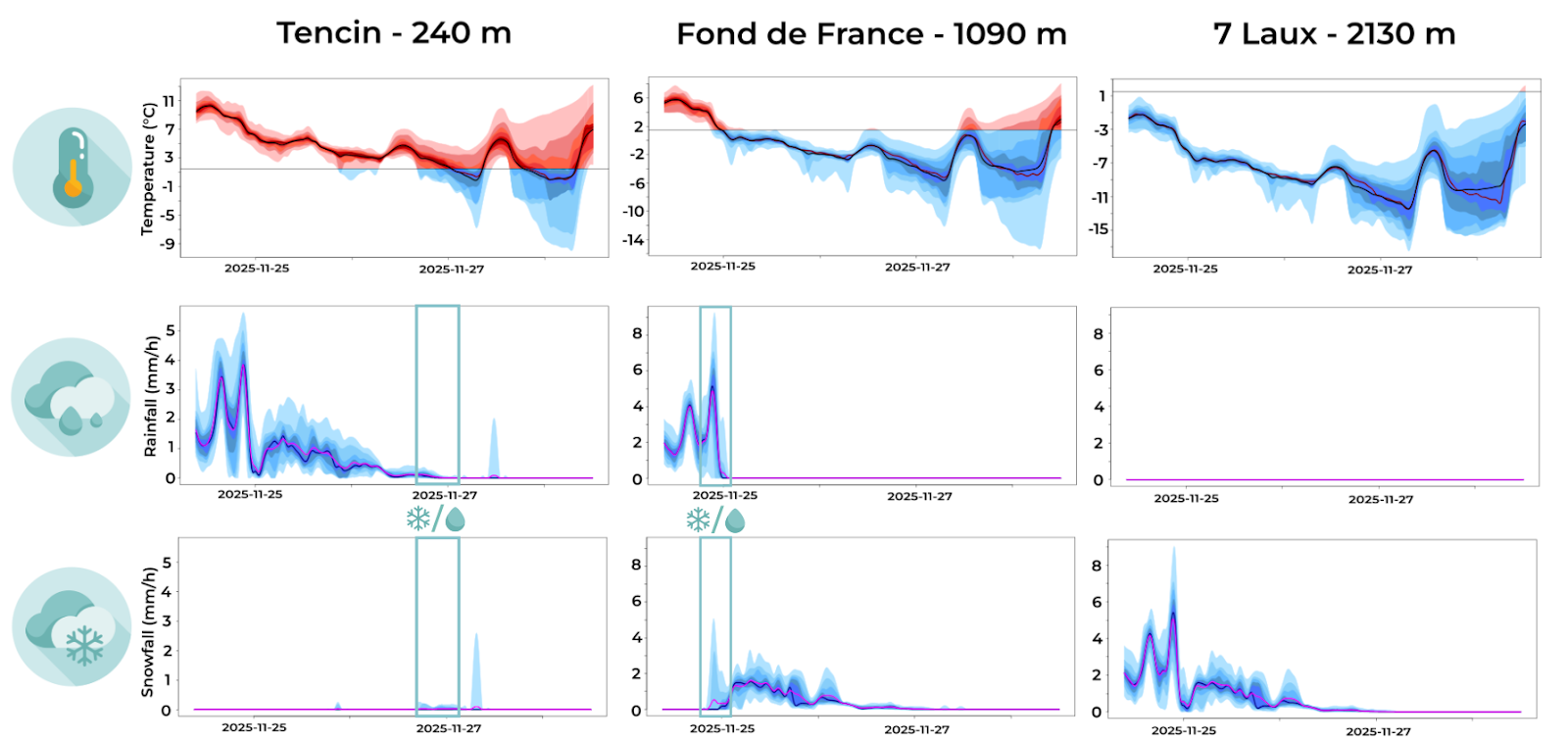



Automation and efficiency are at the heart of modern greenhouse management strategies. In an environment as complex and dynamic as greenhouses, where energy and labor costs weigh heavily on profits, the accuracy of weather forecasts becomes a critical success factor. FROGCAST provides weather forecasts that optimize the automatic management of greenhouses, ensuring maximum yields with minimal resource consumption.
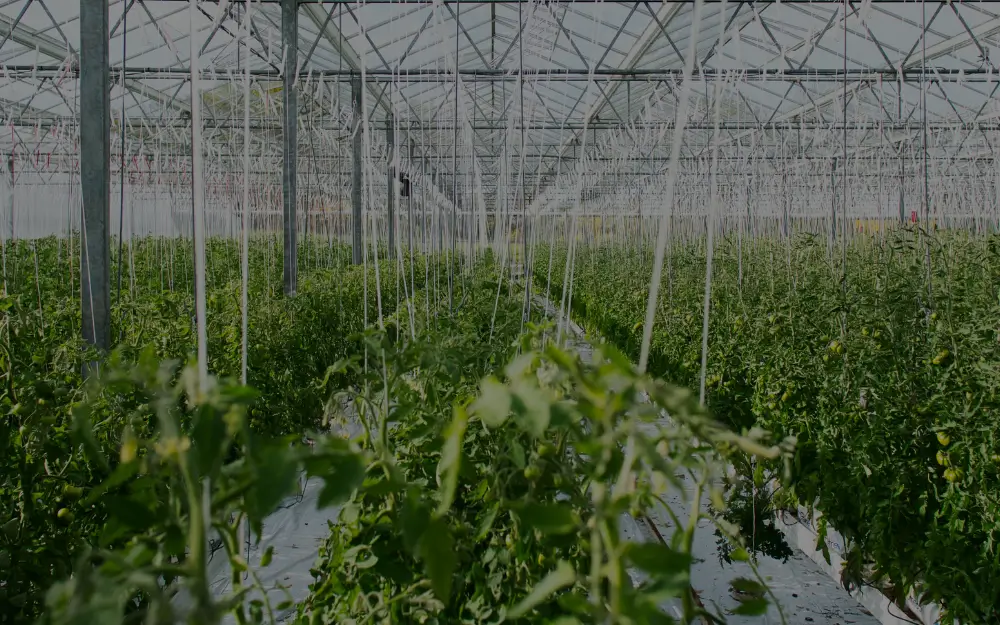
Forecast accuracy: A pillar of automation
Greenhouse control systems are designed to automate numerous daily tasks and create an optimal growth environment for plants. These systems enable precise regulation of various environmental parameters such as temperature, humidity, ventilation, irrigation, and CO2 levels.
The effectiveness of these systems largely depends on the accuracy of weather forecasts. By integrating the accurate weather forecasts provided by FROGCAST, these systems can anticipate and adapt to external conditions, thereby optimizing the internal microclimate.
Accurate forecasts allow automated systems to…
🌡️ Optimize temperature
By automatically adjusting heating and cooling systems based on temperature forecasts, plants can be maintained under optimal growing conditions throughout the day.
🌫️ Manage humidity
Humidity levels can be proactively adjusted to prevent plant diseases and promote healthy development. Accurate forecasts help in planning irrigation and the use of misters or dehumidifiers.
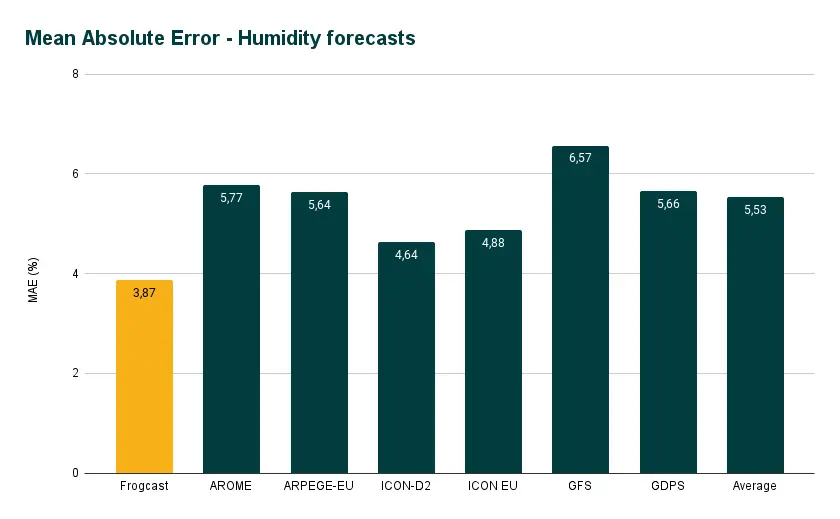
🍃 Control ventilation
Natural or mechanical ventilation can be optimized based on the predicted weather conditions, ensuring adequate air circulation and the regulation of temperature and humidity.
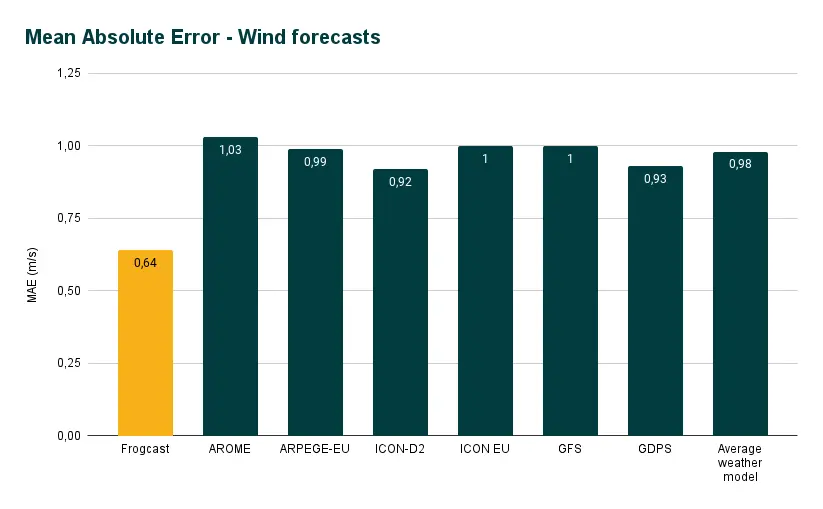
☀️ Regulate CO2 levels
Forecasts enable the planning of CO2 injection to maximize photosynthesis without wasting resources.
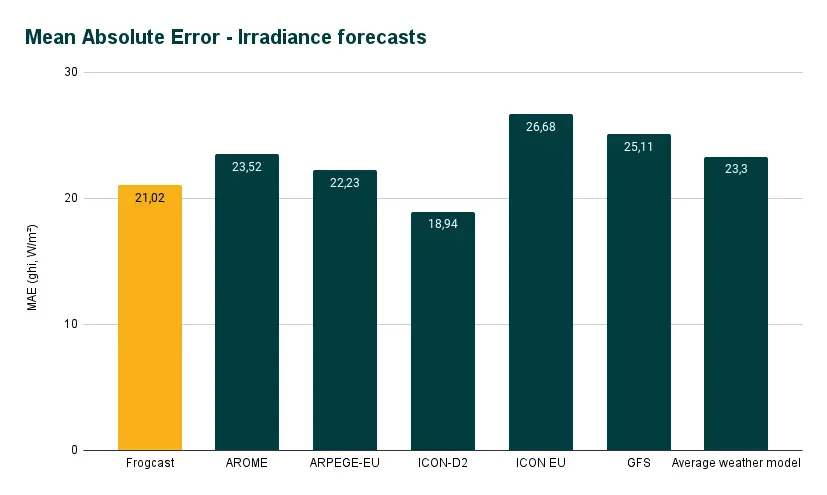
🌧️ Optimize irrigation
Precipitation forecasts are essential for planning irrigation. By anticipating rainfall, automated systems can adjust watering cycles to avoid overwatering and save water.
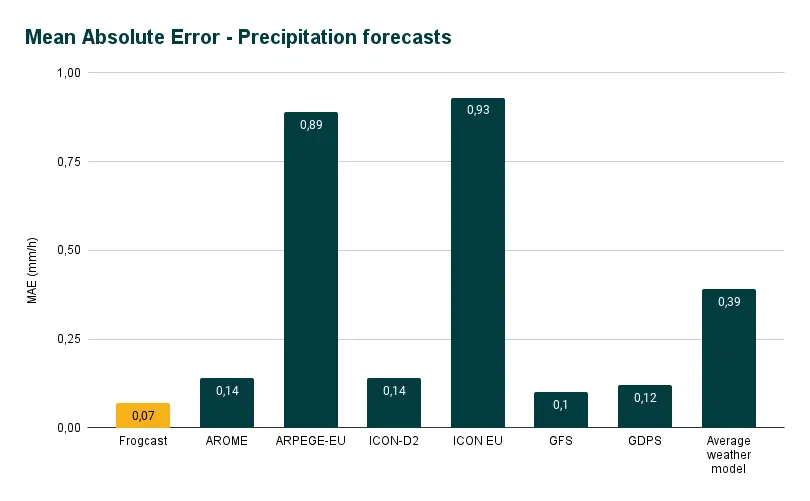
Benefits of FROGCAST weather forecasts for automated greenhouses
1. Cost Reduction
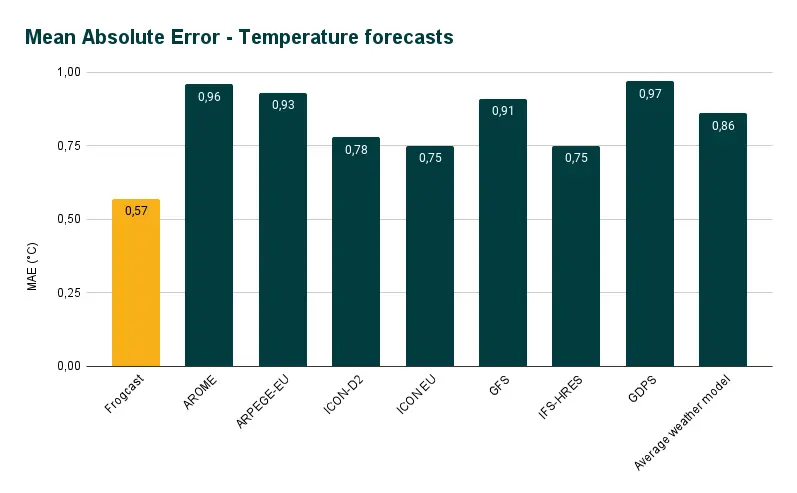
By using accurate weather forecasts (view the benchmark), automated systems can operate more efficiently. This results in reduced costs associated with energy, water, and labor. For example, by adjusting irrigation to forecasted weather conditions, water waste is avoided, and energy costs associated with irrigation systems are reduced.
2. Improved crop quality and yield
Optimal environmental conditions promoted by accurate forecasts lead to better crop quality and higher yields. Plants grown under precisely controlled conditions are less likely to suffer from environmental stress, resulting in more uniform and higher-quality produce.
3. Risk management
Weather forecasts also help in managing risks related to extreme weather conditions. For example, by anticipating a heatwave, cooling systems can be activated in advance to protect crops. Similarly, during periods of high humidity, preventive measures can be taken to prevent fungal diseases. Moreover, in anticipation of strong wind gusts, structural reinforcements can be implemented to prevent potential damage to the greenhouse.
4. Flexibility and responsiveness
Accurate forecasts provide growers with greater flexibility and responsiveness. Automated systems can be quickly adjusted based on changing weather conditions, allowing for real-time responses to environmental conditions and informed decision-making.
Conclusion
Integrating accurate weather forecasts into the automatic management of agricultural greenhouses represents a major advancement for modern agriculture. It not only improves crop yields and quality but also reduces costs and manages risks more effectively. By leveraging the power of weather forecasts, growers can create optimal and sustainable growing environments, addressing the growing challenges of contemporary agriculture.